The Loneliness Paradox: Why Space Missions Might Need Less Togetherness
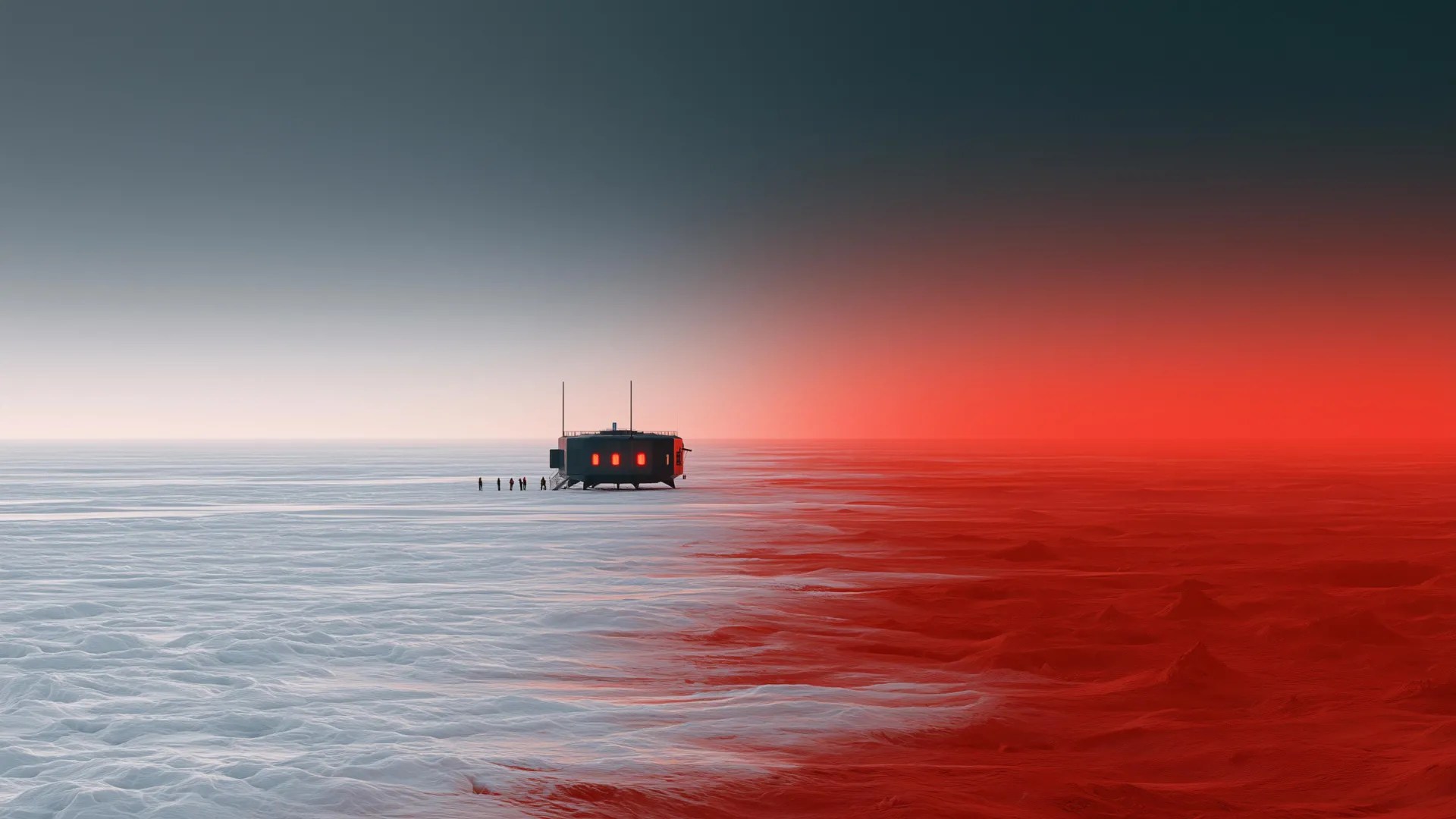
Picture this: a group of highly trained professionals, stranded in a frozen wasteland, enduring months without sunlight, and trapped in a metal habitat smaller than a city bus. Now imagine scientists deliberately designing this scenario—not as punishment, but as a $2 million experiment to simulate life on Mars. This isn't science fiction; it's what happened at Antarctica's Concordia Station. But here's the twist that keeps me awake at night: the more these crew members clung to each other for survival, the more they seemed to unravel as a team.
The Counterintuitive Science of Human Fractures
Let's unpack the most fascinating contradiction from this study. When researchers assumed constant interaction would buffer loneliness, they found the exact opposite. Crew members who spent more time in proximity experienced higher conflict and mistrust. To me, this reveals a fundamental truth about human psychology under pressure: forced togetherness isn't social support—it's sensory overload. Think about your last family road trip crammed in a car for 12 hours. Now imagine that lasting 300 days with no possibility of escaping to the backseat.
What makes this particularly fascinating is how it challenges our evolutionary instincts. Humans are wired to seek tribe membership for survival, yet in extreme environments, that same instinct becomes a double-edged sword. The crew's wearable sensors didn't just track movement—they exposed a pressure cooker of microaggressions. That shared coffee break you'd normally find comforting? In Antarctica's perpetual night, it transforms into a theater of unspoken resentments.
The Invisible Walls of Belonging
Here's where things get even more psychologically complex: the crew naturally splintered into language-based cliques. On paper, this makes sense—shared cultural references provide comfort during crises. But from my perspective, this behavior exposes a dangerous flaw in our approach to space colonization. We're planning missions to Mars with multicultural crews while pretending cultural differences will magically dissolve in zero gravity. The reality? Those differences become fault lines when stress cracks the surface of professionalism.
Consider this: if a French engineer and a Russian mechanic start avoiding each other's company, is it due to personality clashes or deeper cultural programming about authority structures? The study's authors wisely stopped short of conclusions, but personally, I see this as a wake-up call. Future mission architects need anthropologists embedded in their teams as much as astrophysicists.
The Privacy Revolution Space Exploration Needs
One thing that immediately stands out to me is how this research reframes the entire concept of 'teamwork' in extreme environments. We've spent decades romanticizing the Apollo-era 'band of brothers' model, but Antarctica's isolation experiment suggests that model might be fundamentally broken. What future Mars missions actually require are frameworks for controlled disconnection—not just physical privacy, but psychological space to process stress without judgment.
This raises a deeper question: Are we preparing astronauts for the realities of space, or just perpetuating a nostalgic fantasy of rugged collectivism? The wearable sensors in this study didn't just collect data—they held up a mirror to our species' limitations. If we're honest, the real challenge of interplanetary travel isn't surviving radiation storms or learning to garden in regolith. It's surviving each other.
Beyond the Ice: Lessons for Earth's Pressure Cookers
Let's zoom out—this research has implications far beyond space agencies. I've been watching similar dynamics play out in submarine crews, Antarctic research teams, and even corporate 'deep work' retreats where professionals isolate themselves for innovation sprints. The pattern repeats: initial camaraderie gives way to tribalism, then cycles of withdrawal and forced reconnection.
What many people don't realize is that these Antarctic findings might revolutionize how we design remote work protocols. As companies experiment with hybrid work models, we need to recognize that 'proximity' in digital spaces carries the same risks as physical crowding. That Slack channel that never sleeps? It's the virtual equivalent of a crewmate hovering in your personal space 24/7.
The Future of Human Systems in Space
The wearable tech used here fascinates me—not because of its engineering, but for what it represents: the birth of quantified self-measurement in team dynamics. But here's my concern: if we reduce human relationships to sensor data, we risk missing the emotional nuance that defines our species. Will future Mars crews wear 'social fitness trackers' that buzz when they've exceeded their daily conflict quota? That sounds absurd until you remember we've already normalized devices that shame us for not hitting 10,000 steps.
If you take a step back and think about it, this study reveals something profoundly hopeful. By exposing the fragility of human connections under stress, we're finally confronting the myth that technology alone will carry us to the stars. The real frontier isn't rocket science—it's the delicate art of designing social systems that bend without breaking. Maybe the greatest innovation required for Mars isn't better propulsion systems, but permission slips for solitude in a world that pathologizes being alone.
In my opinion, the most important takeaway isn't about space travel at all. It's about recognizing that in our hyperconnected world—whether on Earth or Mars—the ultimate luxury might be the right to disappear.